
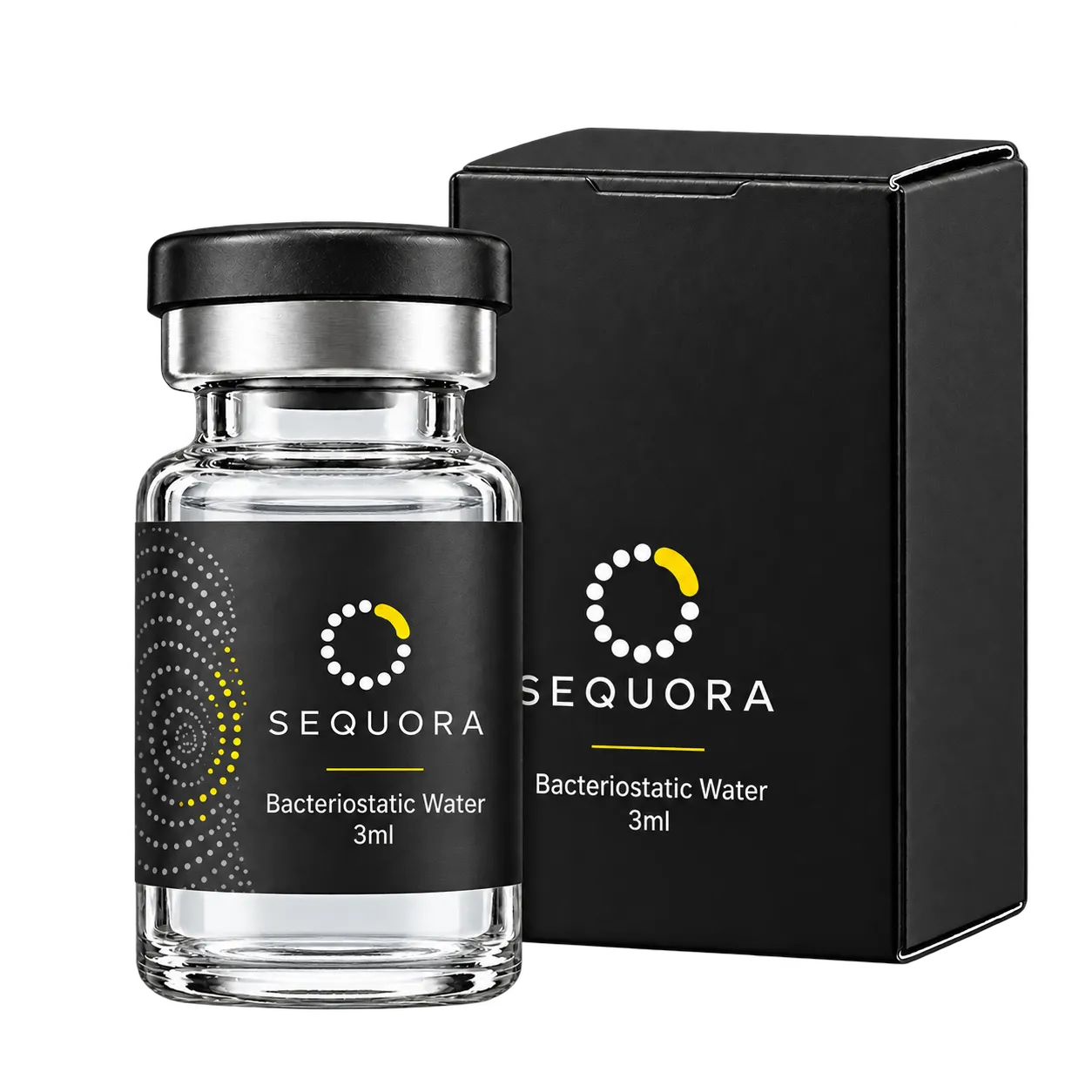
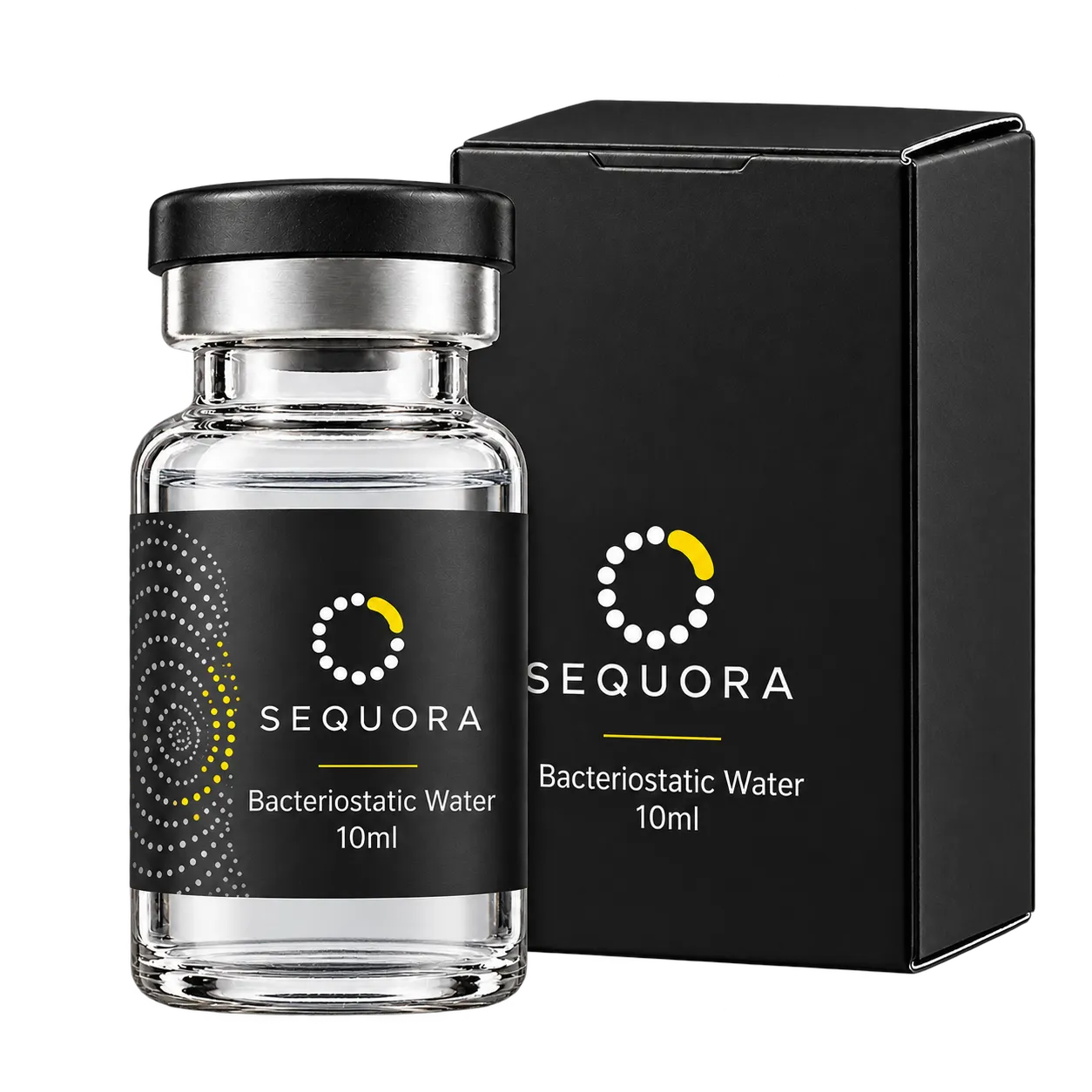
Bacteriostatic water is a diluent used to dissolve or dilute compatible compounds. It contains a preservative, benzyl alcohol, that helps inhibit bacterial growth during repeated access when handled correctly. Solvent requirements, preparation instructions and storage conditions must be checked for the specific peptide being prepared. Sequora have instructions on each of our compounds product pages and information is supplied with every order.
Already have an account? Log in
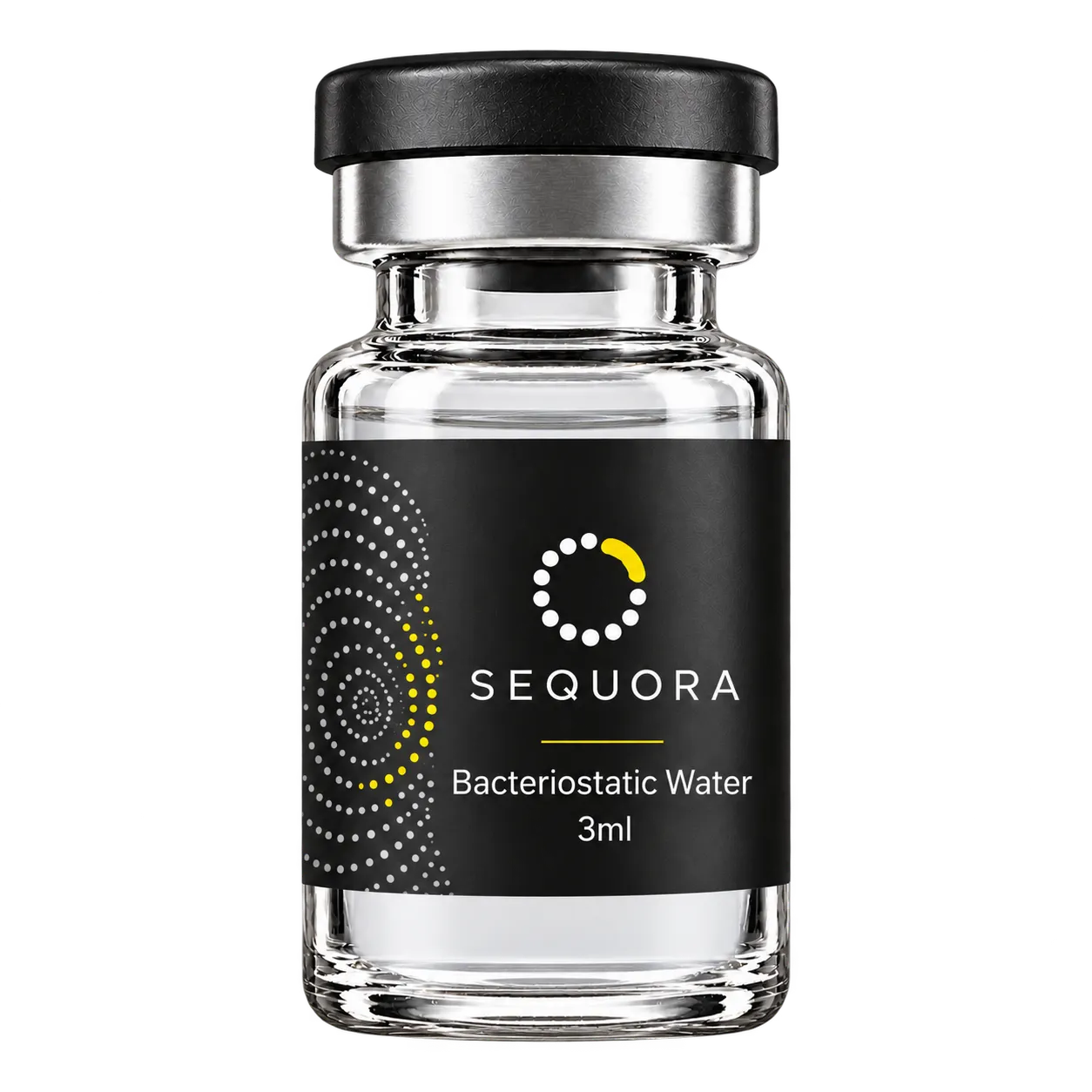
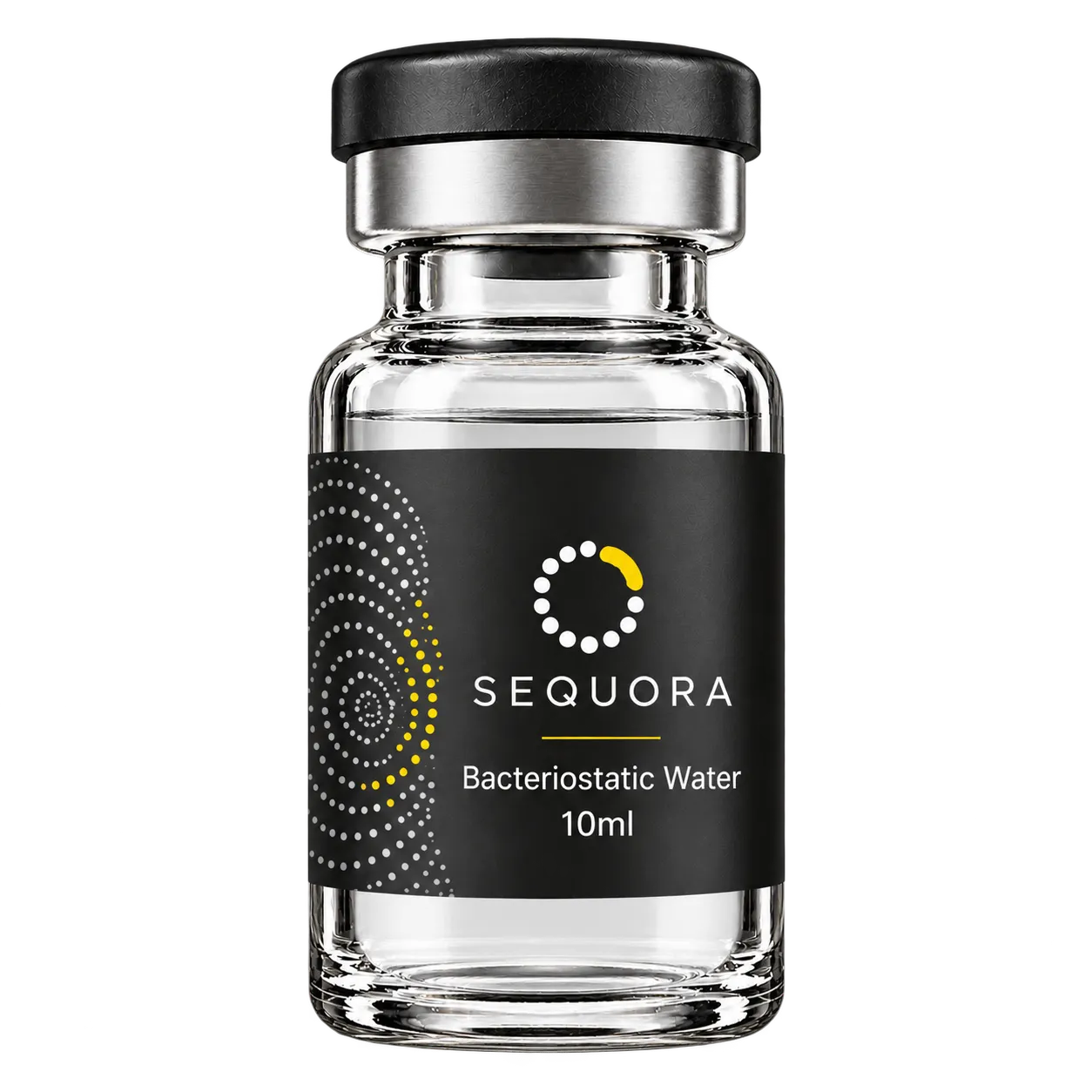
SEQUORA Bacteriostatic Water is a diluent for reconstituting compatible powdered peptides and diluting research compounds. Available in 3ml and 10ml vials, it offers a choice of volume to suit your laboratory requirements.
The vial size indicates the volume supplied. The amount required for each preparation should follow the individual peptide or compounds product information guidance.
All of our products are third party laboratory tested to ensure both purity and verification of the peptide itself.
BAC water contains a preservative, usually 0.9% benzyl alcohol, which helps inhibit bacterial growth and allows repeated withdrawals from a multidose water vial. Plain sterile water contains no preservative. BAC water still requires careful handling and does not sterilise a contaminated compound.
No. Some compounds require preservative-free sterile water, saline or a specific laboratory buffer. The correct solvent depends on the compound’s solubility, stability and compatibility with benzyl alcohol. Check the supplier’s technical information or validated research protocol before purchasing.
Follow the storage instructions and expiry date on the product label, including any instructions for use after opening. Once BAC water is mixed with a research compound, the prepared solution’s storage conditions and usable lifespan depend on that compound. The preservative does not guarantee its stability or shelf life.
Purchasing your BAC Water from a reputable source is always important, you’re potentially putting these things into your body so finding a provider you can trust is vital. SEQUORA Peptides provide fully sterile 0.9% benzyl alcohol BAC water to people across the United Kingdom making sure you are receiving Bacteriostatic Mixing Water you can trust.
Product information, handling and safety
What Temperature should I store my Bacteriostatic Water at?
What are the best practices for using Bacteriostatic Water safely?
The documentation behind Bacteriostatic Water and it's uses
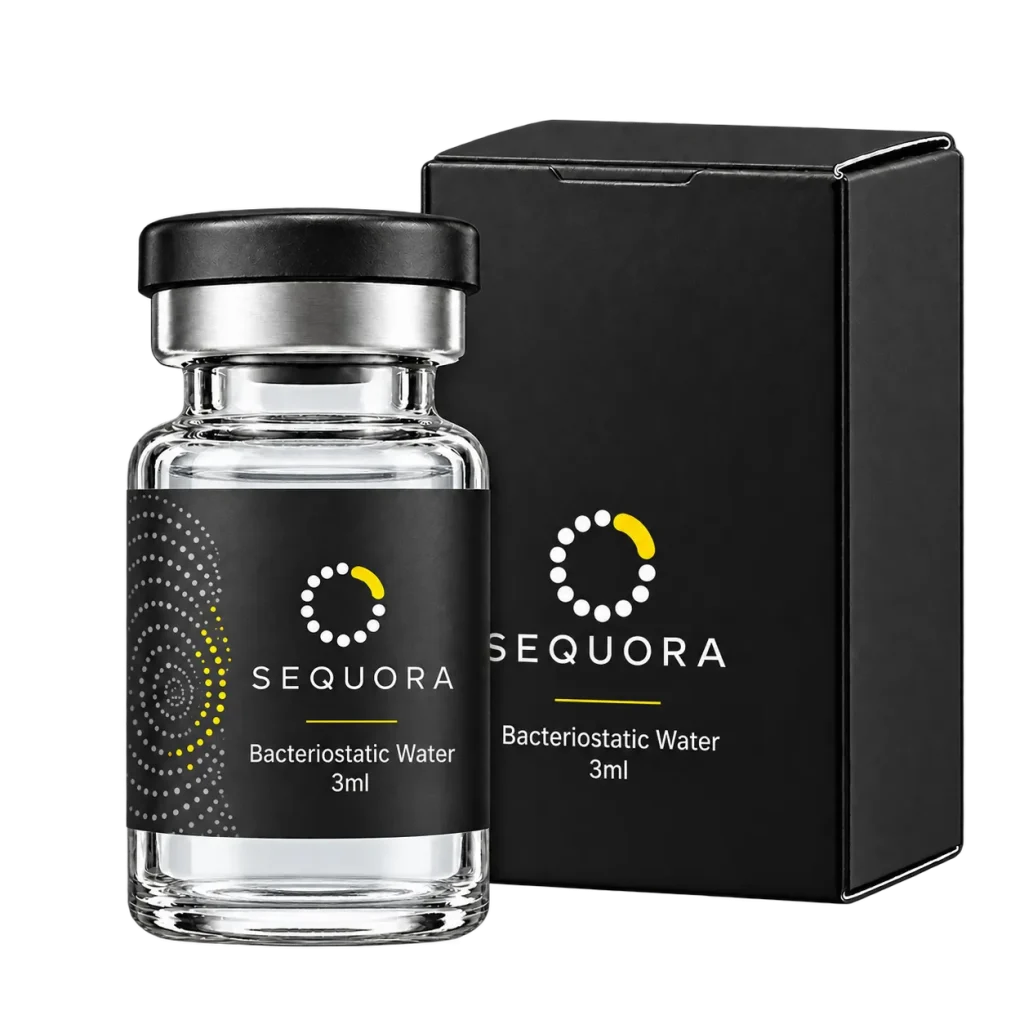
Bacteriostatic water is a diluent used to dissolve or dilute compatible compounds. It contains a preservative, benzyl alcohol, that helps inhibit bacterial growth during repeated access when handled correctly. Solvent requirements, preparation instructions and storage conditions must be checked for the specific peptide being prepared. Sequora have instructions on each of our compounds product pages and information is supplied with every order.
Bacteriostatic Water, unopened can be stored at Room Temperature, once opened store in the fridge at 2-8°C.
Avoid dropping or heavy-handling of your Bac Water.
Please do not freeze your SEQUORA BAC Water as this can compromise its integrity.
Your Bac Water has been shipped in secure packaging to prevent any potential issues however if you believe it may have been compromised contact us directly.
Your SEQUORA BAC Water, unpunctured (unopened) will last 2-3 years from the date of manufacture providing you follow the storage instructions provided.
Once opened or punctured and stored between 2-8°C in a fridge, BAC water should be discarded after 28 days.
Before handling any peptides, needles or injection material ensure your research area is clean and clear.
Wash your hands with warm water and soap and allow to dry fully before handling any SEQUORA products to prevent cross contamination or infection risks.
If at any point the cleanliness of your injection or environment is compromised, restart this step.
Never re-use or share needles/syringes. Ensure your needle tips or syringe is sealed and new before injection.
Ensure to use different needles for drawing out your BAC Water and injecting yourself, and never go back and forth with the same syringe.
If at any point you touch something unhygienic or potentially dirty, re-wash your hands and use new equipment.
Ensure that your needle tips, syringes and vials are safely disposed of post-use.
This could mean a sharps bin or safe container. Most needle tips and syringes have removable tops that can be replaced onto the used needle.
Try to keep your injection site clean for atleast 30 minutes post-injection to prevent infection risks.
Bacteriostatic water is a diluent used to dissolve or dilute compatible medicines. Possible reactions may relate to the solution, its preservative, the added compound or the preparation and injection technique.
Possible reactions
Other important risks
Injection-site infection, abscess formation and tissue damage can occur, particularly where contamination, incompatibility or incorrect preparation or administration is involved. These should not be treated as expected minor side effects.
When to seek medical help
Seek prompt medical advice for increasing pain, spreading redness, warmth, swelling, discharge or fever following an injection.
Call 999 immediately for difficulty breathing or sudden swelling of the lips, tongue or throat.
Important precautions
Correct handling can reduce some risks associated with bacteriostatic water, including contamination and preparation errors. It cannot make an unsuitable compound safe for injection or guarantee that a prepared solution is sterile.
Check compatibility before mixing
Reduce contamination risks
Inspect the vial and solution
Prevent measurement errors
Storage and disposal
If irritation or other symptoms occur
Do not assume pain or irritation is caused only by the water. The added compound, concentration, contamination or administration technique may be responsible. Seek advice before further use if symptoms persist or worsen. Do not try to correct a suspected reaction by adding more water or another substance.
When to seek medical help
Seek prompt medical advice for increasing pain, spreading redness, warmth, swelling, discharge or fever following an injection. Do not continue using a vial suspected of causing an infection.
Call 999 immediately for difficulty breathing, sudden swelling of the lips, tongue or throat or collapse.
Important limitations
Bacteriostatic water inhibits the growth of some bacteria; it does not sterilise contaminated powder, equipment or solutions. Do not inject it on its own. Preparations containing benzyl alcohol must not be used in newborn babies.
About this information
This is general harm-reduction information for Bac Water and Injection Materials as a whole.
Bacteriostatic water changes the concentration of a solution without changing the total amount of compound present. The amount contained in each withdrawal depends on the final concentration and the volume measured.
Example: 20 mg of compound in a final total volume of 1 ml gives a concentration of 20 mg/ml. On a U-100 insulin syringe, the 10-unit marking represents 0.1 ml, containing 2 mg of compound.
| U-100 syringe marking | Liquid volume | Amount of compound |
|---|---|---|
| 5 units | 0.05 ml | 1 mg |
| 10 units | 0.10 ml | 2 mg |
| 15 units | 0.15 ml | 3 mg |
| 20 units | 0.20 ml | 4 mg |
Understanding the figures
Syringe units represent volume on the specified U-100 scale, not milligrams of peptide or biological activity. These figures apply only to a concentration of 20 mg/ml. Different concentrations produce different amounts at the same syringe marking.
Calculation example only
This table does not recommend a dose or establish that a compound is suitable for injection. The calculation assumes a final solution volume of exactly 1 ml, which is not necessarily identical to adding 1 ml of water.
Bacteriostatic water is not compatible with every medicine or compound. Use the dilutent and reconstitution volume specified by the medicine’s manufacturer and confirm suitability with a pharmacist. Adding bacteriostatic water does not sterilise contaminated material.